Category Archives: Infectious disease

Meningitis

=inflammation of the meninges. Clinically fever, neck stiffness, headache, altered consciousness. Photophobia is classic, but not one of the NICE red flags. Almost always vomiting. Fever can be absent, particularly in young babies, or masked by antipyretics. Can be viral, bacterial or tuberculosis.

2024 NICE guidance (adults and children).

This clinical picture gets confused with the diagnosis of meningococcal disease. Meningococcus (gram negative diplococcus, very distinctive under the microscope) commonly causes meningitis but tends to cause a relatively mild disease with good outcome. It can also cause sepsis that is rapid onset and often fatal – meningitis is rarely a feature of this disease (indeed, having meningitis at the same time is a good prognostic feature).

Recognition

Classic symptoms and signs can be absent, particularly in very young children. Young adults can look surprisingly well. Other conditions can mimic too.

Family/carer opinion esssential where reduced consciousness or communication difficulties.

Babies can have bulging fontanelle, weak, high pitched or continuous crying. Older kids may have aggression or agitation (sometimes blamed on intoxication!).

Check for petechiae in conjunctivae. Tricky in dark skin. Purpura or spreading petechiae are a red flag.

Missed immunisations will increase risk, as will being in group accommodation or recent outbreak.

Diagnosis is by lumbar puncture. Tests should not however cause “clinically significant delay” in starting treatment, and should only be done if safe to do so. Contraindications to LP include –

  • extensive or rapidly spreading purpura
  • infection at the lumbar puncture site
  • risk factors for an evolving space-occupying lesion (see below on imaging)
  • any symptoms or signs which might indicate raised intracranial pressure (focal neurology, including posturing/seizures, abnormal pupil responses, GCS=<9 – in which case do imaging first)

Bugs often seen under microscope, which will usually give organism too. Do rapid antigen tests too. White cells will be high (often in thousands if bacterial), protein high (can be over 2 if bacterial). Normal values higher in babies under 3 months. Neutrophil predominance suggests bacterial but this is not v reliable esp in babies. Low glucose v suggestive of bacterial. Presence of blood may indicate alternative diagnosis, or else indicates blood contamination, which should be taken into account [not detailed further, however]

Blood tests should include meningococcal/pneumococcal PCR, HIV test. Do throat swab specifically for meningococcal culture.

Can be complicated by raised intracranial pressure and seizures.

Organisms

In neonates, mostly Group B streptococcus, else gram negative bacilli. Listeria can present with sepsis or meningitis in young infants (90% under 30 days).

In older infants and children, mostly meningococcal disease, else pneumococcal or haemophilus. All declining rapidly as a result of immunisation, currently conjugate Hib, PCV-13 and MenACWY plus 4CMenB.

Treatment

Antibiotics to kill bugs. Steroids to reduce damage.

Out of hospital antibiotics only indicated if likely to be delay in getting to hospital and strong suspicion.

Ceftriaxone is preferred! Broad spectrum, good CSF penetration, once daily. But listeria resistant, and gets chelated by calcium so contraindicated if likely HDU/ICU care where calcium infusions often necessary. Also contraindicated in preterm infants under 41/40 corrected, and in neonates esp jaundice, acidosis, hypoalbuminaemia. In that case use cefotaxime.

If antibiotic allergy, use cef anyway if not severe. If severe, chloramphenicol. Use co-trimoxazole for listeria instead of amoxicillin.

For pneumococcus, 10 days. For Hib, 7-10 days. For GBS, 14 days. For coliforms, 21 days (and discuss using meropenem pending sensitivities). For meningococcus, 5 days only! For unconfirmed bacterial (ie CSF suspicious), NICE says minimum 10/7.

For listeria, amoxicillin or ampicillin for 21 days in total, but discuss using co-trimoxazole, even if not allergic!?). Used to give gentamicin for at least the first 7 days.

Discuss with expert if complicated clinical course.

TB meningitis is a whole different ball game. See NICE NG33 before administering steroids.

Steroids

Dexamethasone has been shown to reduce complications eg deafness in children ≥ 3 months old. Discuss use in babies 28 days to 3 months with infection specialist.

Regimen is 0.15 mg/kg (max 10 mg) qds x 4 days. Ideally given before or with first dose antibiotics – but don’t delay antibiotics. Give if within 12 hours of antibiotics (later than that, only after discussion with specialist).

Stop if bug other than pneumococcus or Hib found. Steroids should not be used in developing countries.

Complications

Hydrocephalus, epilepsy, deafness. Particularly seen with Pneumococcal disease.

Recent evidence highlights that meningitis in early childhood is associated with higher depressive and anxiety symptoms, psychological and behavioural problems, and increased risk of psychotic experiences. Not just that, higher risk of ADHD, and lower IQ on average. Follow up therefore very important for young babies, and probably appropriate to warn families.

Enteric fever

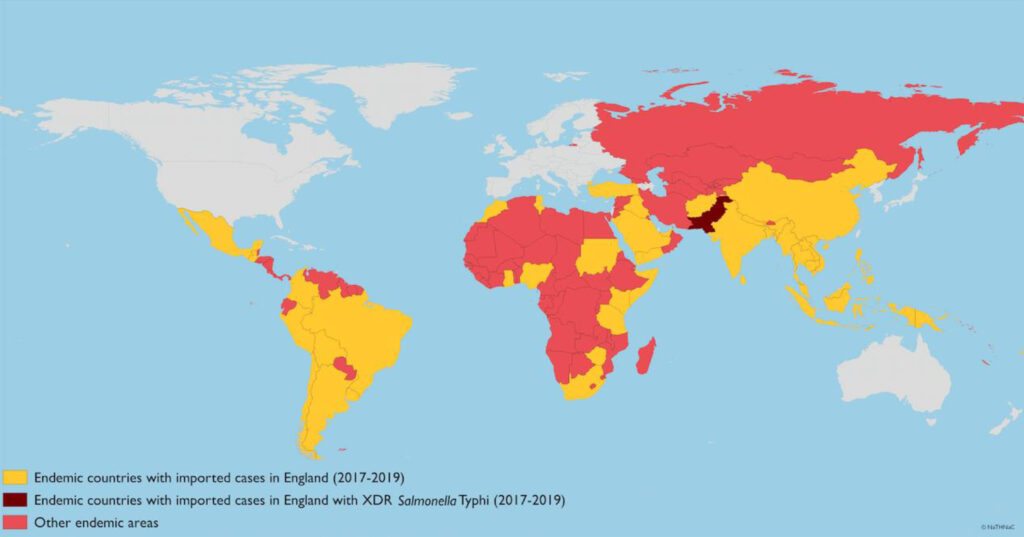
Meaning typhoid and paratyphoid infection.

Typhus means smoke, refers to clouded consciousness characteristic of typhus and typhoid.

S. paratyphi treated the same but milder.

Pretty non-specific presentations – although called enteric, not striking vomiting/diarrhoea, in fact can be constipated…

Intracellular organism… Gall bladder and Peyer’s patches become focuses of infection (including chronic infection). Incubation period 10-14 days (up to 30!).

3 sets of blood cultures and stool cultures!

Typhoid Mary was Irish-American cook who was an asymptomatic carrier and caused at least 80 cases of typhoid in New York – her signature dish was peach ice cream… Asymptomatic carriage was not known about until her case investigated, she was told not to continue working as a cook but was not offered compensation. She was quarantined for 30 years of her life, the last 23 essentially in solitary confinement on an island off New York… Pretty harsh.

Clinical

Abdominal tenderness common. Rose spots (maculopapular, contain organisms!) hard to see in non-Caucasian. Less than 1 in 4 have them. Bradycardia with fever in first week. Hepatosplenomegaly in up to 50%. Nothing specific otherwise, but see complications below…

Complications

  • GI bleeding and perforation
  • Cholecystitis
  • Pancreatitis
  • Myocarditis/pericarditis
  • Osteomyelitis
  • Pneumonitis

Diagnosis

Culture from blood or bone marrow is gold standard. Stool culture could potentially pick up aysmptomatic carrier with another febrile illness… Low sensitivity anyway, esp first week.

Serological tests poor sensitivity/specificity (cross react with other Salmonella types).

Treatment

Always treat, even if well and only from stool (cf other salmonella types).

IV ceftriaxone if sepsis/shock, GI bleeding, intestinal perforation, encephalopathy, metastatic infection, total 10-14 days. Else azithromycin (loading dose 1g, 500mg daily 7 days; children 20mg/kg). [UK-PAS] For areas of high resistance and sepsis, Meropenem plus azithro [CDC Yellow Book].

Normal for fever to take 3-5 days to settle. After that, look for persistent locus and consider additional antibiotic. Fever can persist for 10 days with cefalosporins (low intracellular penetrance).

Drug resistance is a big problem. Fluoroquinolone resistance in most of Asia and sub-Saharan Africa. Oral third generation cephalosporins are also effective although inferior in RCTs.

Where nalidixic acid resistant, in vitro susceptibility to quinolones definitely reduced – use of maximum permitted doses and extending treatment course to 10-14 days will result in cure in >90% of cases — although the clinical response is slower.

Lots of data on quinolone use in children, but theoretical risks so Azithromycin preferred although response possibly slower.

[BIA guideline for England 2022]

Influenza

Incubation period 1-4 days. Infectious period from day before symptoms appear, to 5 days after symptoms appear.  Virus shedding can persist for months in immunocompromised (as other viruses).

Main types A and B.  B shows antigenic drift, with minor variations over time.  A shows antigenic shift, with appearance of new N type usually associated with global pandemic eg Spanish flu. Influenza viruses circulate through birds and pigs, so new types typically occur through reassortment of genes across different species (Chinese food markets are a perfect petri dish).

Case definition

At least one of these systemic symptoms: Fever (or feverishness), malaise, headache, myalgia;

PLUS at least one of these respiratory symptoms: cough, sore throat (!), shortness of breath.

Transmission

  • Large droplet eg sneezing, range only a metre or so.
  • Direct/indirect contact eg sneezing into hands, and then to surfaces.  Survive at least 24 hrs in environment.
  • Aerosol generating procedures can produce small droplets with further range (how far?).  Includes intubation, extubation, open suctioning, CPAP/HFOV/BiPAP, CPR.  NOT high flow O2 or nebs.

Prevention is therefore by good hygiene viz covering nose and mouth during coughing/sneezing, wiping with disposable tissues, avoiding touching nose/eyes/mouth, washing hands (alcohol gel adequate if hands visibly clean); and immunisation.

For close patient contact, aprons, masks, gloves recommended.  Similarly, consider eye protection.

For aerosol generating procedures, FFP3 (filter face piece, efficiency grade 3) masks required.  Such masks can be worn for up to 8 hours if necessary.  Fluid repellent gowns if extensive secretions or bodily fluids anticipated.

Complications

  • Pneumonia, ARDS
  • Meningitis/encephalitis – see below
  • Myositis and rhabdomyolysis leading to kidney failure (esp flu B)
  • Guillain-Barre syndrome
  • Peri/myocarditis
  • Reyes syndrome (liver failure and encephalitis, also associated with aspirin)
  • Encephalitis lethargica? Probably not… Epidemic around time of Spanish influenza pandemic, fever then neuropsychiatric deterioration – estimated 1m cases globally, high mortality. Cf Subacute sclerosing panencephalitis (measles).

Encephalitis

Neurological presentations are mostly transient, improving within 48 hours. Pre-existing neurological disorders more at risk (unusually severe seizures in known epileptic children, mostly).

Rarely acute necrotizing encephalitis (treat with high dose steroids). CT can show (classically bilateral thalamic necrosis) but MRI better of course. Not just influenza but viral, and immune mediated (no virus found in brain/CSF). Familial susceptibility described due to RANBP1 mutation. [2024 Review from Toulouse]

Vaccination

See immunisation. Antigenic drift means new influenza vaccines need to be developed each year, reflecting the common serotypes affecting people in other parts of the world who have already had their winter. 

2021 metanalysis (37 studies) found immunisation in children was 53.3% effective against hospitalization (68.7% vs flu A/H1N1pdm09 specifically).

Only 44.3% for live-attenuated influenza vaccines cf 68.9% for inactivated vaccines.

2017 metanalysis: similar effectiveness vs asthma ED visits.

Long list of people at higher risk eg chronic cardiac/respiratory conditions.  Includes pregnant women.  See Green book on immunizations.

Nasal (live) and injectable (inactivated) vaccines available.

Treatment

See Influenza treatment.

Rheumatic fever

Rare in developed world now, still common in underdeveloped world, or at least in underdeveloped communities eg Aboriginal Australians.  Prob also genetic susceptibility.

Caused by Group A streptococcus.  Important cause of acquired heart valve disease.  Can recur.

Probably cross reactivity between specific Group A strep M proteins and human tissues.

Erythema marginatum
Erythema marginatum

Diagnosis

Jones criteria:

  • Major
    • Carditis eg new murmur.  Mitral most commonly, classically apical blowing pan-systolic.  Aortic next most common.
    • Arthritis esp large joints.  Migratory.
    • Subcutaneous nodules – these are the most uncommon major criterium (in Turkish study of over 1000 cases there were none with nodules).  Typically over extensor surfaces of joints, 0.5-2cm, symmetrical.
    • Sydenhams chorea
    • Erythema marginatum – not specific to rheumatic fever. Seen in 0.4% of Turkish study patients. Serpiginous or annual eruption, can look similar to erythema multiforme. Provoked by warmth eg bath.  Non pruritic.
  • Minor
    • Fever
    • Arthralgia
    • Prolonged PR interval on ECG
    • Elevated CRP/ESR
  • 2 major or 1 major plus 2 minor, plus confirmation of group A streptococcal infection eg positive culture, high ASO titre sufficient for diagnosis. Modified Jones takes into account background incidence.

Note that initial infection may be subclinical eg pharyngitis, erysipelas. Symptoms of rheumatic fever develop 10 days to several weeks later. Chorea can appear months later.  Low threshold for echo as carditis can also be subclinical.

Established criteria for rheumatic valvulitis – Gewitz 2015

Treatment

Antibiotics – Treat with penicillin,  this does not however affect clinical course but hopefully prevents further spread of that particular bug. Traditionally single dose intramuscular Penicillin G Benzathine.

NSAIDs for joint pain.  Usually dramatic response, if not then reconsider diagnosis!

Valproate for chorea, possibly steroids – see Sydenham’s.

Aspirin and/or Steroids for carditis, but not much evidence.  Diuretics, ACE inhibitors for cardiac failure.

Long term treatment

Recurrence with progression of valve damage is the main concern, and well recognized. Subclinical carditis improves in about 50% but definite risk of progression (mild definite and borderline RHD showed 26% and 9.8% echocardiographic progression respectively).

Regular intramuscular penicillin (benzathine pencillin G) every 2-3 weeks has the lowest recurrence rates but oral penicillin V more acceptable.  Erythromycin or cephalexin if allergic.

WHO recommendations:

  • Rheumatic fever without carditis: 5 years after last attack or until age 18 (whichever is longer)
  • Rheumatic fever with carditis but without residual disease: 10 years after last attack or until age 25 (whichever is longer)
  • Residual valve disease or valve replacement: lifelong

American and Australian heart association guidelines vary slightly:

Penicillin prophylaxis guidelines comparison

Complement

C3 and C4 are measured at the same time since this gives an indication of the complement pathway (classical or alternative) which is being activated and thus the cause of this activation.

C3 alone is often decreased in infectious disease (septicaemia, endocarditis), so not v interesting if isolated, unless concern about immunodeficiency (see below).

C4 alone is characteristically decreased in hereditary angioedema, can also be immune complex diseases particularly vasculitis, and in cryoglobulinaemia and cold agglutinin disease. Immune complex diseases can lead to consumption of both C3 and C4, with low levels.

Measurement of serum complement is useful in the monitoring of specific immune complex diseases eg SLE, post streptococcal disease, subacute bacterial endocarditis. Consumption of one or both components may also be useful prognostically eg nephritis in lupus.

Deficiency

Complement deficiency is a type of immunodeficiency.  Though genetic C3 deficiency is v rare, deficiencies in other components (which are more common, though still very rare) can result in low C3.  CH50 or CH100 are better tests of whole pathway.

Genetic deficiencies in C4 are rarely detected.

Notifiable diseases (Scotland)

Public Health etc Act Scotland 2008

There are notifiable diseases and notifiable organisms:

Notifiable diseases

  • Clinical syndrome due to E.coli O157 infection
  • Haemolytic Uraemic Syndrome (HUS)
  • Necrotizing fasciitis
  • Severe Acute Respiratory Syndrome (SARS)
  • (plus infections caused by organisms below)

Notifiable organisms

  • Bacillus anthracis (anthrax)
  • Bacillus cereus
  • Bordetella pertussis
  • Borrelia burgdorferi (Lyme disease)
  • Brucella genus
  • Campylobacter genus
  • Chlamydia psittaci
  • Clostridium botulinum (Botulism)
  • Clostridium difficile
  • Clostridium perfringens
  • Clostridium tetani
  • Corynebacterium diphtheriae (toxigenic strains)
  • Corynebacterium ulcerans
  • Coxiella burnetii
  • Crimean-Congo haemorrhagic fever virus
  • Cryptosporidium
  • Dengue virus
  • Ebola virus
  • Echinococcus genus
  • Verocytotoxin-producing E.coli (VTEC)
  • Francisella tularensis
  • Giardia lamblia
  • Guanarito virus
  • Haemophilus influenzae type b (from blood, cerebrospinal fluid or other normally sterile site)
  • Hantavirus
  • Hepatitis A-E virus
  • Influenza virus (all types, including those caused by a new sub-type)
  • Junín virus
  • Kyasanur Forest disease virus
  • Lassa virus
  • Legionella genus
  • Leptospira genus
  • Listeria monocytogenes
  • Machupo virus
  • Marburg virus
  • Measles virus
  • Mumps virus
  • Mycobacterium bovis
  • Mycobacterium tuberculosis complex
  • Neisseria meningitidis
  • Norovirus
  • Omsk haemorrhagic fever virus
  • Plasmodium falciparum, vivax, ovale and malariae (malaria)
  • Polio virus
  • Rabies virus
  • Rickettsia prowazekii
  • Rift Valley fever virus
  • Rubella virus
  • Sabia virus
  • Salmonella (all human types)
  • SARS-associated coronavirus
  • Shigella genus
  • Enterotoxigenic Staphylococcus aureus
  • Staphylococcus aureus (all blood isolates)
  • Methicillin-resistant Staphylococcus aureus (MRSA)
  • Streptococcus pyogenes (from blood, cerebrospinal fluid or other normally sterile site)
  • Streptococcus pneumoniae (from blood, cerebrospinal fluid or other normally sterile site)
  • Toxoplasma gondii
  • Trichinella genus
  • Varicella-zoster virus
  • Variola virus
  • Vibrio cholerae
  • West Nile fever virus
  • Yellow Fever virus
  • Yersinia enterocolitica
  • Yersinia pestis
  • Yersinia pseudotuberculosis

Congenital Syphilis

In US primary, secondary and cong syphilis all surged in the 90s, now focal outbreaks in urban, drug using population. In N Africa, 3% of pregnancies, up to 7% in Carribean. 1 million pregnancies affected worldwide, of which 50% will end in abortion or still birth, and the other 50% will be congenital cases (unlike TORCH).

Clinically, 2/3 affected neonates asymptomatic at birth. Otherwise:

  • “snuffles” (vesicles on upper lip, highly infectious)
  • mucous patches (moist erosions)
  • hepatosplenomegaly and hepatitis
  • anaemia +/- hydrops
  • meningitis, with CSF pleocytosis and high protein
  • pneumonia, +/or fluffy diffuse infitrates on CXR (=pneumonia alba)
  • pseudoparalysis

Years later:

  • Typical facies – frontal bossing, saddle nose, short maxilla, high palate
  • Mulberry Molar (5 blobs in ring shape to tooth, pathognomic!). Hutchinson’s incisors (peg-like) better known.
  • Gummata (rubbery ulcers)
  • Sabre tibia (anterior bowing)
  • Hutchinson’s triad = interstitial keratitis, peg shaped incisors, and sensorineural deafness.

Prevention

The risk of transmission is very high, particularly for untreated primary (ie a chancre) or secondary (ie multiple lesions, lymphadenopathy) disease. The risk falls to 40% for early latent syphilis (ie test positive but asymptomatic, with infection likely to have occurred in the previous 12 months on the basis of previous tests, symptoms or exposure). A category exists of latent syphilis of unknown duration, which only applies to patients aged 13-35yrs with nontreponemal titre of 32 or more.

Treating syphilis in pregnancy – for early acquired disease (primary, secondary or latent of <1yr) benzathine penicillin 50 000U/kg, with second dose a week later if in third trimester [BNF] but exclude neuro. For late latent syphilis >1yr duration give 3 doses at weekly intervals. For neuro disease benzylpen 50 000U/kg qds for 10-14/7 followed by 3 doses benzathine penicillin as above. If HIV positive also, then there tends to be more CNS disease, treatment failure, and treatment reactions (fever, myalgia, preterm labour – give steroids).

Adequate antenatal treatment = adequate benzathinepenicillin dose (2.4M Units IM) once weekly x3 – erythromycin is not reliable), 30 days before birth, proven 4x drop in nontreponemal serology.

Diagnosis

Syphilis tests are either nontreponemal or treponemal.

  • Nontreponemal viz VDRL, RPR are screening tests, 70% sensitive in primary, 99% in secondary.
    • False positives – lupus, infection, recent immunization, pregnancy, other treponemes.
    • Quantitative – correlate with disease activity: 4x rise in titre early on or in relapse, drop of 4x suggests adequate response to treatment. In secondary, titres are always high ie 1:32.
    • False negative – early? Tertiary – V high levels of antibody! So if high suspicion then do dilutions.
    • Should become negative within 1 yr of treatment in primary, 2 yrs in secondary or congenital, 5 yrs in late.
  • Specific treponemal tests eg TP immobilization (TBI), fluorescent T antibody absorption (FTA-Abs) used to confirm.
    • False positive with non pallidum, Lyme or other borrelia.
    • Remain positive for life, even with treatment.
    • Do not correlate with disease activity.
    • FTA-Abs IgM available for testing baby, but still has false positives/negatives

In newborns, direct microscopy and fluorescent antibody tests can be done from mucous patch, else from placenta (beware non pallidum treponemes in normal flora esp mouth). PCR can be done from lesions too. VDRL more than 2x dilutions richer than mum’s is suggestive. IgM can be negative early esp infection occurring late in pregnancy, not always recommended. False positive VDRL may occur due to transplacental antibodies if high maternal levels.

Where disease is likely, or maternal treatment has been inadequate, further testing is required:

  • FBC, LFTs
  • Lumbar puncture, incl VDRL on CSF (not 100% sensitive so if congenital disease suspected, treat for neuro.)
  • XR long bones to look for destructive lesions. Even in asymptomatic, XR changes seen in 20% esp ankles, knees but also wrists, elbows. Lesions are symmetric, multiple: periostitis, osteitis, osteochondritis.
  • CXR
  • Ophthalmology assessment

For screening adults, 1 step strip test available, and one off oral treatment (Azithro, 1.8g). Antibodies give only partial protection.

Treatment

For congenital syphilis treat with benzylpen 100-150 000 U/kg/d in bd or tds doses for 10-14/7.

There is concern about CSF levels with procaine or benzathine penicillin, although sometimes these are used for asymptomatic babies with nontreponemal tests less than 4x mum’s, which might occur with inadequate treatment. In this situation, any abnormal finding on evaluation requires full 10/7 course.

If late diagnosis (>4/52), give high dose viz 200-300 000 U/kg/d qds for 10-14/7. If CNS disease is excluded, this could be converted to benzathine penicillin.

Follow up

Monitor to show fall in VDRL at 3-6 months.

(Rana Chakraborty, St George’s)

MRSA

=methicillin resistant staphylococcus aureus.  Cf methicillin sensitive staph, MSSA.

Methicillin resistance equates with flucloxacillin resistance. mecA is the methicillin resistance gene, which codes for a low affinity PBP (penicillin binding protein) – ie penicillin can’t bind easily. The gene has probably crossed from coag neg staph on at least 5 occasions to create MRSA strains. As with MSSA, different strains exist, carrying a range of different pathogenic genes.

Traditionally MRSA was found in institutions and the elderly, but now can be seen frequently in the young and healthy, causing the same infections that MSSA causes eg skin/soft tissue. It can also be responsible for rarer, more severe diseases eg necrotizing fasciitis. The US Center for Disease Control details criteria for distinguishing hospital acquired and community acquired MRSA infections – community acquired strains are typically SCCmec type IV (this is the cassette that contains mecA), which are sensitive to most non-beta lactam antibiotics, but on the other hand is associated with Panton Valentine Leucocidin (PVL, a cytotoxin associated with necrotizing disease). But again, this distinction is becoming less clear with strains associated with community acquired infection becoming more frequent in hospital acquired cases, and having variable levels of non-beta lactam antibiotic resistance.

In itself, antibiotic resistance may not translate to increased virulence and pathogenicity – it may just make it harder to treat. Studies have shown that after correcting for other factors eg age and co-morbidity, mortality is not significantly different. However, one important factor is use of inappropriate antibiotics, which of course is more likely with MRSA. Furthermore, in the US many MRSA outbreaks are caused by the USA300 clone, which carries a number of genes (in common with Methicillin sensitive staphylococcus aureus) eg PVL, ACME which are associated with enhanced pathogenicity.

PVL seen in 50% of symptomatic (skin) community MRSA in the US. Now also being reported in hospital acquired MRSA. Prevalence much lower in Europe, but risk of spread. Geographical areas tend to have their own clones (eg type 80 in Europe), with occasional pandemic.

Epidemiology

  • MRSA has been shown to survive on sterile packaging for at least 6 months.Journal of hospital infection 2001;49(4):255-61.
  • Basic simple infection control like hand washing works.
  • MRSA prevalence in hospitals is associated with macrolide and 3rd generation cephalosporin use.Clinical microbiology and infection 2007;13(3):269-76.
  • Alcohol hand rub reduces its transmission and hospitals which have introduced a policy of using this between patient contacts reduce their MRSA rate.
  • Isolation and screening work but may be impracticable in emergency admissions or in hospitals with near 100% occupancy.

In the UK, most MRSA are resistant to quinolones and macrolides. Even if sensitive to quinolones, treatment is not recommended as resistance evolves rapidly. Most MRSAs are sensitive to tetracyclines (but not for use under 12yrs), rifampicin, co-trimoxazole, and linezolid, all of which can be given orally. Clindamycin can be effective but beware inducible resistance – see below. No evidence for trimethoprim alone (cf septrin); use in combination with rifampicin? Probably best not to give rifampicin or fusidic acid monotherapy anyway as resistance frequently induced.  See antibiotic classes.

In MRSA skin infections (cellulitis/abscesses), most will get better anyway, esp after I&D, but using the wrong antibiotic increases risk of treatment failure by odds ratio of 2.80 (87% success cf 95% of patients who received an active antibiotic). Topical agents will induce resistance if used for high load infections eg wounds, catheter sites so should be combined with systemic therapy.  About 12% are resistant to topical mupirocin.

For intravenous therapy, gentamicin, vancomycin and teicoplanin are effective, although vancomycin resistance has been described since 2002. Teicoplanin levels can be unpredictable, and treatment failure associated with low levels has been seen; checking levels would make sense (aiming for trough of at least 10, 20 in endocarditis) but is rarely done. In line infections, vancomycin or linezolid should be used if the infection is severe; if milder, then removal of the line and oral therapy may be sufficient.

In bone infection, linezolid is good but should be given for a maximum of 28 days. Fusidic acid and Rifampicin are good adjuncts (rifampicin has in vitro activity against biofilms). Clindamycin and co-trimoxazole have also been used for bone infections. Early surgery (eg within 2/7 of onset of symptoms) is important esp where a prosthesis is present.

Necrotising pneumonia with MRSA post-influenza has mortality up to 75%.

For bacteraemia/endocarditis, vancomycin is the drug of choice, as treatment failures have been described with teicoplanin. Rifampicin or fusidic acid can be considered as adjuncts; there is no evidence for adding an aminoglycoside. A minimum of 14 days treatment is required (although oral treatment may be appropriate for maintenance) but should be extended if vegetations seen on trans-oesophageal echo. Infected pacemakers should be considered the same as orthopaedic prostheses.

Clindamycin resistance is sometimes only 1 mutation away from erythromycin resistance. If the bug is erythromycin sensitive, then there is no issue, and clindamycin is a good choice (and can be given orally). On the other hand, if erythromycin resistance is seen, then the D test should be done: if a D-shaped zone appears around the clindamycin disk when an erythromycin disk is placed nearby, then you have induced resistance and clindamycin should be avoided. The erm gene is responsible for erythromycin-inducible resistance; the mrsA gene also confers resistance to erythromycin but does not affect clindamycin.

Eradication

Once colonized, about 40% of patients develop persistence – commoner where skin breaks present. Vancomycin does not clear nose, throat or gut.

Eradication of S. aureus nasal colonization eg with 72 hour mupirocin has been successful. However, recolonization usually occurs within a relatively short time, and the Cochrane review did not find much evidence in favour. Use of mupirocin to prevent infection in endemic settings eg dialysis centers have shown conflicting results although metanalysis suggests benefit (but fear of mupirocin resistance). Neomycin is even less effective, but is an alternative where mupirocin resistance is seen.

Combined treatment seems sensible, and recent RCT of 2% chlorhexidine gluconate washes, 2% mupirocin ointment intranasally, oral rifampin and doxycycline for 7 days vs no treatment confirms. At 3 months of follow-up, 74% cf 32% had cleared. Still significant benefit at 8 months (54% of those treated culture negative). On multivariable analysis, having a mupirocin-resistant isolate increased the risk of treatment failure nearly 10 fold. Mupirocin resistance emerged in only 5% of follow-up isolates. Clin Infect Dis. 2007 Jan 15;44(2):178-85.

Other control measures include a combination of active surveillance cultures of high risk patients, improved health care worker hand hygiene, consistent use of contact precautions for colonized/infected patients, and directed treatment of health care workers implicated in transmission. PIDJ January 2005 pp 79-80

Screening patients seems to reduce hospital acquired infection in the Netherlands, but not in Switzerland. UK guidelines say do for high risk only eg previous carriers, transfers, ICU. Standard infection control procedures alone seem to have worked in UK although what do you compare with? Rapid test (PCR) did not help (in crossover trial) except in reducing inappropriate isolation. 3-4x as expensive.

[UK guidelines, J antimicro chemo 2006 PMID 16507559]


Toxic shock syndrome

Criteria for Staphylococcal Toxic Shock Syndrome (TSS)

Necrotizing fasciitis

Life threatening infective necrosis of superficial tissue fascia, often more extensive than would be suspected by appearance of overlying skin.  Can start in previously normal skin, with an insignificant entry site!

Group A streptococcus mostly, but can be polymicrobial especially in immunocompromised.

The top three early presenting clinical features are swelling, pain and erythema but these are entirely non-specific, so initial misdiagnosis common (almost three-quarters of patients in 1 review). More specific features are:

  • pain out of proportion to the physical findings;
  • failure to improve despite broad-spectrum antibiotics;
  • presence of bullae in the skin; and gas in the soft tissue on plain X-ray.

Other possible characteristics described:

  • tense oedema extending beyond margin of erythema
  • loss of sensation
  • LRINEC score in adults based on lab criteria (high glucose, high creatinine, high CRP, high WCC, low sodium, low Hb) has 76% sensitivity, NPV 88.1%.

Early surgical exploration is the best approach in the uncertain case; and early surgical debridement is key to control. IVIG may be of benefit.

Notifiable in Scotland.