Category Archives: Common

Renal investigations

Ultrasound

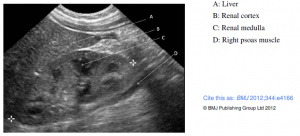
Renal uss image anotated

Incomplete bladder emptying cannot be diagnosed on a single post-void residual urine on ultrasound, due to significant intra-individual variability. Two post-void residual urine tests are recommended; larger volumes are seen if the bladder has been over distended (eg initial volume greater than 115% of expected), and in younger children. Greater than 20 ml is more specific than 10% bladder capacity. [J urology 2009 (182):1933]

Bladder capacity is = (Age +1) x 30 (ml) max 390ml.


Enterovirus

Mild: fever +/- rash, hand/foot/mouth, herpangina, pleurodynia, pharyngitis, conjunctivitis, croup.

Serious: meningitis, encephalitis, acute paralysis, neonatal sepsis, myo/pericarditis, hepatitis, chronic infection (immunocompromised).

Meningo-encephalitis in neonates usually associated with other organ involvement. In adolescents headache can be severe and symptoms last several weeks! Early CSF can show around 1000 neutrophils! Prognosis good, although some subtypes with encephalitis highly aggressive eg EV-71 outbreak in Taiwan in assoc with hand/foot/mouth (78 deaths).

Acute flaccid paralysis can occur cf polio. Particularly Enterovirus EV-D68 (also associated with respiratory disease), some clusters.  Increased incidence across Europe including Wales since April 2016.

Neonatal disease can be severe, mimicking bacterial sepsis or HSV. Maternal history is often elusive.

Virus is shed in throat and stool (rectal swab quicker than stool!), can also be detected in CSF, blood and urine.

Role of IVIG is unproven but antibody plays an important role in immune response to EV. Pleconaril in enteroviral meningitis RCT, 38% to 50% improvement in symptoms in the drug-treated group with improvement noted as early as 24 hours after initiation of therapy – no longer available.

[Current Opinion in Pediatrics. 13(1):65-9, 2001]

Human Parechovirus has been described in Japan, Canada and now the Netherlands, causing neonatal sepsis or encephalitis in about 10% of cases where culture suggests enterovirus but PCR is negative. [Clin Infect Dis. 2006 Jan 15;42(2):204-10]

Haematuria

In a study of 342 kids with asymptomatic microscopic haematuria, no cause was found in the large majority of patients. The most common cause discovered was hypercalciuria (16% of patients) followed by post–streptococcal glomerulonephritis (1%). No evidence for value of early detection of hypercalciuria (may be at long-term risk for nephrolithiasis and bone demineralization).  The children with asymptomatic post–streptococcal glomerulonephritis all improved spontaneously and without complication.  None had evidence of urinary tract infection! Clinically insignificant abnormalities in the upper urinary tracts of 5 children and grade 3 reflux in 1  [Arch Pediatr Adolesc Med. 2005;159(4):353-355. doi:10.1001/archpedi.159.4.353]

Asympt recurrent can be monitored for 5yr!

Beware:

  • frank blood,
  • protein,
  • hypertension,
  • other features (joints, rash, wt loss)

Haematuria defined as persistent dipstick positive on at least 3 occasions for at least 3 months. Else as >2rbc per HPF (not same as flow cytometry). Then consider:

  • Red cells or not?
    • myoglobinuria = haemolysis
    • beetroot!
    • Porphyrins, other unusual pigments
  • Proteinuria or not?

If spot urine abnormal, repeat on early morning urine and then proceed to 12-14hr collection. Urine calcium/creatinine has age specific normals, high at birth (up to 1.5 in toddlers) falling to adult max of 0.7 at age 7. High levels especially significant in the presence of a normal plasma calcium

Investigations – only do bloods if macroscopic or nephritis suspected:

  • Do urine culture and microscopy.
  • Do PCR if proteinuria.
  • If macroscopic, do FBC, U&Es, LFTs, Coag.
  • Renal USS
  • Screen family members with urinalysis
  • Spot urine calcium/creatinine
  • If acute nephritis, do C3/4, ASOT, immunoglobulins, ANCA, anti GBM as below.
  • If stones suspected, do 2 sets of spot urine Ca/creat, Oxalate/creat, Urate, amino & organic acids, pH, KUB.

Differential is:

  • Tumour – bladder (colour changes during voiding, dysuria with sterile culture) or kidney
  • IgA nephropathy – persistent, progressive in 30%, diagnosis on biopsy
  • Alports – usually X dominant, deafness in minority, cataracts in 10%
  • Sickle cell – 1% macroscopic, 16% microscopic. Papillary necrosis, usually painless, episodic. May progress to sickle nephropathy.
  • Venous thrombosis – esp neonates, nephrotics.
  • Vascular – AVM, Nutcracker syndrome (compression of the left renal vein between the abdominal aorta and SMA)
  • Nail-patella syndrome (BM disorder, like Alports)
  • Polycystic Kidney Disease

Biopsy if persistent high grade microscopic, or microscopic with proteinuria (>150 mg/24 hr)/hypertension/impaired renal function, or 2 episodes of gross haematuria. Cystoscopy for bladder problem.

Colic = Cry-Fuss Behaviour

Cry-fuss behaviour (=colic etc), mean is just short of 2hrs per day for first 6 weeks, reduces to 72 minutes by 10-12 weeks.

“Colic” suggests that there is a bowel issue, usually suspected due to drawing legs up, passing wind – but these could be considered normal for crying and distress, of any cause.  Reflux (GORD) is often blamed, yet international consensus states there is no evidence to support an empiric trial of acid suppression as a diagnostic test in infants and young children, even though symptoms tend to be less specific [Vandenplas, J Pediatr Gastroenterol Nutr. 2009 Oct;49(4):498-547. doi: 10.1097/MPG.0b013e3181b7f563]!

Cause

Mums with an anxiety disorder prior to pregnancy are at higher risk of having a child with excessive crying at 2, 4 or 16 months postpartum compared with mothers without an anxiety disorder.  Risk increased further for mothers who developed an anxiety disorder during pregnancy.

So does maternal anxiety lead to “intrusive” parenting, in turn increasing infant crying ?[Arch Dis Child 2014;99:800–6]. Else fetal programming?  Genetics?

What’s the influence of fathers!?

Surprisingly, maternal depressive disorders, cf anxiety, experienced before or during pregnancy, did not predict maternal report of excessive infant crying.  Is the difference withdrawal, rather than intrusiveness?

Reflux

Consider 2 week trial of anti-secretory eg ranitidine (but NOT PPI – increase risk of infection esp respiratory and GI, associated with parietal cell hyperplasia, and possibly food allergy!).  But don’t assume improvement due to response!  Or investigate with pH monitoring.  Or stick to supporting parents!   Even if arching and refusing to feed, no evidence of effectiveness.

Infection

5% have UTI retrospectively, but in absence of other signs, investigations not routinely required.

Associations

Crying that lasts more than 3 h per day, for more than 3 days per week and for more than 3 weeks in a row—is associated with child abuse and maternal depression!  Higher scores on PND scale persists at 6/12 even if crying resolves…

6% of parents retrospectively admit physically abusive behaviours towards baby when crying.

Predicts shorter duration of breast feeding.

Persistent problems with cry-fuss behaviour at 5/12 associated with later behavioural problems (metanalysis, but confounded by psychosocial risk factors).

Management

Reassure the parents/carers that infantile colic is a common problem that should resolve by 6 months of age.

RCTs of behavioural sleep intervention under 3/12 did not decrease crying.  So encourage parent-infant reciprocity (ie responding to crying) until old enough to suit Gina Ford type regimented sleep regimes.

Encourage the parents to try relaxed cue based care, sleeping in the same room as the baby (not the same bed – beware SUDI) , offering physical contact esp skin to skin contact, and ensuring the baby gets lots of rich sensory experiences during the day.  This,  combined with average 10 hours of physical contact per 24hr (even if asleep), associated with 50% less crying and fussing. Only 37% of 3/12 babies sleep 8hrs straight at night.

Night waking is associated with co-sleeping and breast feeding, but breast feeding does not equate with less total sleep for parents over the whole 24hr period (quality, however, may be inferior).

Over sensitive babies may benefit from OT/Physio, but beware removing sensory stimulus as associated with neurodevelopmental problems.  Massage, wrapping may help, little evidence for chiropractic, craniosacral, nutritional.  Offer diverse sensory stimulation (through parents’ own social life and activities).

If symptoms are severe (subjective, of course) or persist after 4 months, consider an alternative underlying cause for symptoms.

NICE says seek specialist advice from a paediatrician if infant is not thriving, or symptoms are not starting to improve or are worsening after 4 months of age.

Caveat for GPs is “Seek specialist advice if Parents/carers feel unable to cope with the infant’s symptoms despite reassurance and advice in primary care.”


Feeding

Feed refusal is often linked, often impaired mutual regulation of feeding that result in entrenched patterns of difficult feeding esp breast feeding issues.

The following suggest a feeding problem –

  • 4 heavy disposable nappies per day minimum
  • 3-4 yellow curdy stools if breast fed minimum
  • Nipple/breast pain, attachment problems
  • falling asleep within 10 minutes, feeding longer than 30 minutes (active feeding ie not including dozing, interacting) regularly
  • clicking sound, gurgly sounds, absence of swallowing sounds
  • Increased resp effort

Expect 125g per week growth average in first 3 months.  Tongue tie only really relevant to breast feeding babies.

Babies who have infrequent large feeds are not necessarily abnormal, and cue based feeding rather than scheduled 3-4hrly feeds often works better.

So offer feed calmly, unless already full blown crying, in which case calm holding eg skin to skin until more settled.  Cochrane review concluded that pacifier use does not interfere with breast feeding in mothers who are motivated.

Some evidence for trial of hydrolysed formula. RCT of 107 breast fed babies with colic excluded dairy, soy, wheat, nuts, fish and shortened duration of crying, but only CMPI really substantiated.  Probiotic has helped in RCT but roles of feed management, lactose overload etc need to be elucidated first?

Functional lactose overload? – as feed progresses, fat level usually increases so transit time slows.  If insufficient fat, rapid transit leads to lactose fermentation in colon (lower cholecystokinin levels seen).

Parent Support

The self-help support group Cry-sis for families with excessively crying or sleepless children, has a website and runs a national telephone helpline (0845 122 8669).

There’s also parent info including a video at http://www.nhs.uk/Conditions/Colic/Pages/Introduction.aspx


[https://cks.nice.org.uk/colic-infantile#!scenario]

[Clinical review BMJ 2011;343:d7772  doi: http://dx.doi.org/10.1136/bmj.d7772]
Plagiocephaly

Differential

The clinical criteria for a unilateral lambdoid synostosis consist of an ipsilateral occipital flattening, a depressed ipsilateral ear lobe (inferior movement) and a parallelogram-like shape in the posterior view. All three of these signs were present in the eight synostotic infants. Furthermore, all children had developed a compensatory contralateral parietooccipital bulging that led to a slanted tree top-like shape of the head at follow-up. Normal posterior view (ie ears level) and anterior movement of the ear excludes LS [but photo looks like ipsi anterior movement in LS – is it contralat in PP??? No mention of anterior bossing, not obvious in photo].

German study – all LS cases obvious clinically. Where positional plagiocephaly was doubted, USS demonstrated patent sutures.

[Arch Dis Child 2015;100:152-157 doi:10.1136/archdischild-2014-305944]

Monitoring

Measure the oblique diameter left (ODL) and oblique diameter right (ODR) lines are drawn from points located 40° either side of the antero-posterior (AP) line. 40° is typically where deformation most notable.  Express as difference (the Oblique diameter difference (ODD) = ODL−ODR) or else ratio between the ODL and the ODR (oblique diameter difference index, or ODDI).

[European Journal of Pediatrics March 2006, Volume 165, Issue 3, pp 149-157]

Treatment

Dutch RCT of 6 months of helmet therapy (n=84 infants aged 5 to 6 months with moderate to severe skull deformation, exclusions were prems, muscular torticollis, craniosynostosis, or dysmorphic features). Full recovery was achieved in 10 of 39 (26%) participants in the helmet therapy group and 9 of 40 (23%) participants in the natural course group (odds ratio 1.2, 95% confidence interval 0.4 to 3.3, P=0.74). All parents reported one or more side effects.

[van Wijk RM BMJ 2014; 348 (); g2741]

Some evidence for bedding pillows (but SUDI risk?) and stretching exercises.

Haemangiomata

2018 classification (ISVVA.org) – rather functional and lacking in poetry!

Basically benign tumours, involving blood vessels.  Seen in 12% of all infants  – more common in girls, whites, premature infants, twins and are babies born to mothers of higher maternal age!  Mostly seen in head and neck region, including the face, but can be anywhere.

Tumours distinguished from malformations.

Infantile Haemangioma

Cutaneous/mucosal haemangiomata usually develop after birth, appearing in the first 8 weeks of life.  They then develop and grow for 6-12 months, often resembling a strawberry.  Most then start to reduce and fade gradually, although it can take up to 9 years.   Often there will be complete disappearance with no cosmetic defect, but there may well be scarring, telangiectasia, or loose fibro-fatty tissue.

Can be further differentiated by depth (superficial tend to be raised and bright red, deep are generally darker red or even purple/blue, they can also be mixed) and extent/pattern (focal or segmental).

Typically they are in the skin and soft tissues, but can sometimes affect the liver or airways.  Associated with GLUT-1 positive staining on biopsy.

Congenital Haemangioma

Much less common. Present at birth and do not progress, although they may grow proportionally with child.  Oval or round, plaques or exophytic.  Some rapidly involute during the first year of life but otherwise they are permanent.

Vascular malformations

Grow slowly compared with vascular tumours.  Usually present at birth but perhaps inconspicuous until child grows.  Can involve arteries, veins, lymphatics in various combinations.

Capillary malformations most common – dilated capillaries, classic port wine stain (naevus flammeus).  Darken over time, do not regress.  Can be associated with bone or soft tissue overgrowth. Multiple can be associated with underlying AVM!

Nevus simplex is the classic “stork bite” at the nape, eyelid or forehead at birth. Lighter, regress.

Venous malformation more ill defined, bluish, easily compressible.  Multifocal tend to be autosomal dominant.  Some syndromes eg Blue rubber bleb naevus syndrome (widespread, including palms/soles).

Lympoedema and cystic hygroma are the lymphatic versions.

Others

  • Pyogenic granuloma – reaction to trauma, well demarcated, raised or even pedunculate
  • Telangiectasia eg Hereditary haemorrhagic telangiectasia (HHT)
  • Angiokeratoma – characteristic of tubersclerosis
  • PHACE syndrome (post fossa malformations, haemangiomata, arterial anomalies, cardiovascular defects, eye anomalies – but also midline defects)
  • Tufted angioma and Kaposiform haemangioendothelioma – similar histologically, but latter bruised, purpuric appearance, infiltrate into muscle/adipose tissue and associated with Kasabach-Merritt syndrome (consumptive coagulopathy).
[Seminar intervent radiol 2017][Ped dermatology 2016]

Angioedema

Swelling, usually acute, non-pitting.  May be erythema too.  Typically affects face, especially lips, tongue, eyes, but can be limbs, even internal!

Usually related to urticaria (wheals). As with urticaria, can be allergy – clue is consistent trigger, pattern of recurrent episodes – but can have other causes.

Angioedema without urticaria – consider hereditary or drugs, especially NSAIDs and ACE inhibitors.

Lower limb variants

Beware 2 problems, with additive or compensatory effects e.g. foot and hip!

Rotation probs ie in-toeing and out-toeing.

Metatarsus adductus is common.  Outer edge of foot is curved, and vertical line through heel misses 2nd/3rd toe space.  Rigid forms need serial casting, else 90% improve without treatment by 6-9 months of age.

Internal tibial torsion can be seen by keeping patellae parallel (sitting, or kneeling), and seeing angle of foot.  No treatment required unless severe (tibial rotational osteotomy).

Femoral ante version is more common in girls and often familial.  W posture sitting, patella points in, eggbeater pattern running.  80% resolve spontaneously, else osteotomy (but high rate of complications).

Out toeing normal in first 24 months.  Usually external tibial torsion; occ femoral retroversion.  External tibial torsion associated with patellofemoral instability.  Beware Perthes and SUFE in school age children, esp  unilateral.

Pes Planus – Flexible or rigid?  Arch reforms on tiptoeing?  Rigid suggests congenital vertical talus (rocker bottom heel) or JIA, either way, usually painful.  Beware CP or muscular dystrophy or connective tissue disorder.  Asymptomatic is considered benign.  Insoles may be useful for pain and shoe deformation, do not correct flat foot!

Angular problems ie genu varum/valgum

(Bow/knock)  Gap between knees (intercondylar distance) should be <6cm, gap between ankles (intermalleolar) should be <8cm.  Beware rickets, renal osteodysplasia, tumours, skeletal dysplasias.  Note association between high impact sport and genu varum – cause or selection?  Increased risk of injury/OA in later life…  Differential includes Blounts disease (also associated with obesity).

Knock knees exacerbated by external tibial torsion, ligamentous laxity, obesity.  Less typical pattern of rickets but seen.

[Yeo, BMJ 2015;351:h3394 – videos too]


Pharyngitis treatment

Pencillin is generally recommended, as resistance in group A streptococcus is unheard of, and risk of rash with amoxicillin if actually Epstein-Barr.  For group A streptococcus a 10 day course has better microbiological clearance but probably no benefit clinically to 5 days.

For scarlet fever, treat for 10 days with any antibiotic except azithromycin (5 days).

Comparative efficacy of antibiotics vs gp A strep pharyngitis – Seventeen trials (5352 participants) were included; mixed adults and kids?

  • no difference in symptom resolution between cephalosporins and penicillin (intention-to-treat (ITT) analysis; N = 5; n = 2018; odds ratio for absence of resolution of symptoms (OR) 0.79, 95% confidence interval (CI) 0.55 to 1.12).
  • Clinical relapse was lower with cephalosporins (N = 4; n = 1386; OR 0.55, 95% CI 0.31 to 0.99; overall number needed to treat to benefit (NNTB) 50), but found only in adults (OR 0.42, 95% CI 0.20 to 0.88; NNTB 33).
  • There were no differences between macrolides and penicillin. Children experienced more adverse events with macrolides (N = 1, n = 489; OR 2.33; 95% CI 1.06 to 5.15).

Evidence is insufficient to show clinically meaningful differences between antibiotics for GABHS tonsillopharyngitis. Based on these results and considering the low cost and absence of resistance, penicillin can still be recommended as first choice.  But not much logic in replacing any other antibiotic with penicillin! [Cochrane Database of Systematic Reviews. 4:CD004406, 2013. UI: 23633318]

Short courses (3-6 days) of amox, co-amox, cefuroxime/cefixime (cefalexin not studied), macrolides etc are actually better than standard 10 day course of penicillin, but more expensive.  [ Cochrane Database of Systematic Reviews 2012, Issue 8. Art. No.: CD004872.]

SAPG 2022 recommends penicillin but if shortage amoxicillin then flucloxacillin. For penicillin allergy, clarithromycin preferred, then erythromycin, then azithromycin. Third line cefalexin, then co-amoxiclav, then co-trimoxazole.