Category Archives: General paediatrics

Ehlers-Danlos syndrome

Covers a spectrum of problems, classified by Beighton (as in hypermobility, Marfans etc). “Vast genetic heterogeneity and phenotypic variability” – 2017 proposed classification includes 13 subtypes!

Classically:

  • joint laxity (hypermobility),
  • skin hyperextensibility,
  • tissue fragility (easy bruising, skin splitting, hernias, prolapses).

Stretchy skin can feel soft and doughy.  Associated with atrophic scars (that look like bad healing).

Mild myopathy seen.

  • Type 1 is severe, commonly born prematurely due to premature rupture of membranes, joint and skin laxity are gross with frequent orthopaedic problems. History of hernia repair? Aortic root dilatation and mitral valve prolapse have been reported but evidence on prognosis is still conflicting.
  • Type 2 is milder and so often underdiagnosed.
  • Type 3 is benign joint hypermobility without skin problems!
  • Type 4 is the rare but severe form where risk of arterial rupture, mostly between ages 20-40. Autosomal dominant so may be history, sometimes characteristic facies. Abnormal bruising is characteristic and the skin is unusually translucent but paradoxically it is not especially hyperextensible, and hypermobility may not be very obvious (perhaps only in fingers)! Problems rarely present before age 20 so important to pick up. Arterial rupture can affect anywhere – aneurysm or bizarre fistula may precede, else trauma or surgery may be a trigger. Bowel rupture is often seen although not usually lethal, pregnancies can be affected by uterine rupture +/- haemorrhage.

Sheffield does genetic testing.

Coeliac disease

Autoimmune process triggered by gluten, distinct from type 1 IgE mediated wheat allergy –  leads to subtotal villous atrophy in terminal ileum. Multifactorial, genetics important – at least 90% positive for DQA1*05 and DQB1*02 alleles that code (confusingly) for DQ2 and/or the DQB1*03:02 allele that codes for DQ8 molecules.  The risk of having coeliac disease without these variants is less than 0.1% so good negative predictive value, but very little positive predictive value – you may not have it now, but you may well get it in the future.

1 in 200, mostly undiagnosed/adult, decreasing in children. More girls than boys, 10% risk to 1st degree relatives.

Randomized trial of early introduction of gluten (4 months, rather than UK recommended 6 months) in 1300 babies found not a single case of coeliac disease at age 3, cf 7 cases in later introduction group (JAMA Ped 2020) – similar result for egg/peanut allergy (same EAT study).

Signs

Become less convincing the older you are! Can present even in infancy, although diagnosis may be delayed for a year or more.

Consider in patients with:

  • Chronic or intermittent diarrhea
  • Chronic constipation not responding to usual treatment
  • Chronic abdominal pain
  • Distended abdomen
  • Recurrent nausea, recurrent vomiting

Should also be considered for these extra-intestinal symptoms:

  • Weight loss, failure-to-thrive, stunted growth/ short stature
  • Delayed puberty, amenorrhea
  • Irritability, chronic fatigue
  • Neuropathy
  • Arthritis/arthralgia
  • Chronic iron-deficiency anaemia
  • Decreased bone mineralization (osteopenia/osteoporosis), repetitive fractures
  • Recurrent aphthous stomatitis
  • Dermatitis herpetiformis–type rash
  • Dental enamel defects
  • Abnormal liver biochemistry

And consider for these specific situations:

  • First-degree relatives with CD
  • Autoimmune conditions: T1DM, thyroid disease, liver disease
  • Down syndrome, Turner syndrome
  • William’s-Beuren syndrome
  • IgA deficiency

[ESPGHAN guidelines 2020]

Diagnosis

Biopsy is no longer essential for diagnosis in children with high serum IgA class antibody concentration against transglutaminase 2 values (10 times the upper limit of normal) with appropriate tests and positive endomysial antibodies (EMA-IgA) in a second serum sample, even in absence of symptoms. Shared decision making with parents recommended.

Children with positive IgA class antibodies but under 10x ULN should have biopsy.

Beware IgA deficiency (associated with coeliac disease, which gives false negatives for IgA TTG – our lab can see this when they do the test, so no need to request total). Also good to check FBC, ferritin, folate, LFTs, Calcium, prothrombin time.

“HLA typing is not required in patients with positive TGA-IgA, if they qualify for CD diagnosis with
biopsies or if they have high serum TGA-IgA (>=10x ULN) and EMA-IgA positivity. If a patient tests negative for HLA DQ2 and DQ8, the risk of CD is very low, while a positive result does not
confirm the diagnosis.”

“Recent studies suggest that the no-biopsy approach to diagnose CD can be applied in asymptomatic children. In asymptomatic children, however, the PPV of high TGA-IgA >=10x ULN may be
lower than in symptomatic children, which needs to be considered during the decision-making process”

  • Positive tTG alone is insufficient for diagnosis, and should not be a reason for gluten free diet.
  • If tTG is high but less than 10x upper limit, then proceed to duodenal biopsy.
  • If tTG more than 10x upper limit of normal, alternative to biopsy is to check IgA EMA and do HLA DQ2/8 screening. If BOTH positive, diagnosis is confirmed. If EMA not available, a second strongly positive tTG is an acceptable alternative (but save serum for EMA testing at future date).
  • If IgA deficient, use IgG tTG or EMA, but less specific so low threshold for biopsy.

Note that antibodies may be false negative if the diet is low in gluten at the time of testing. So normalize gluten intake (at least 2 meals per day, for at least 6 weeks) but discuss with specialist if clinical condition so poor that treatment cannot be safely delayed.

False positives also occur, so diagnosis must be confirmed by endoscopy (or another diagnosis may become apparent). Endoscopy for high risk symptoms (diarrhoea, wt loss, anaemia) and serology is 100% sensitive for coeliac. But a proportion with high risk symptoms and positive serology do NOT have positive biopsies! Cause? Perhaps atypical disease (ie no GI symptoms) is actually more common than typical! Consider the incidences of anaemia, infertility, short stature, unfavourable pregnancy outcomes…

Screening

Coeliac disease is associated with other conditions, which may justify screening:

  • Type 1 diabetes (8%)
  • IgA deficiency (up to 7%)
  • Downs, Williams and Turners syndromes!
  • Autoimmune thyroiditis
  • Autoimmune liver disease
  • Unexplained abnormal LFTs
  • Relatives of coeliac disease patient (10% in 1st degree relative)

Before testing, discuss relative risks of untreated coeliac disease (osteoporosis, infertility, small bower cancer), and the need for biopsy and gluten free diet if tests are positive. Then test:

BSPGHAN say check HLA DQ status and IgA tTG.  NICE says do not use HLA DQ2/8 in non-specialist settings, but consider if not proceeding to biopsy or those on low gluten.

  • If HLA DQ2/8 neg, then v unlikely.
  • If DQ pos but tTG neg, then unlikely (unless IgA deficient or on low gluten diet). Still potential to get disease later in life, so test again in 3yrs or if symptomatic.
  • If DQ/tTG pos but tTG less than 3x upper limit of normal, then do IgA endomysial antibody (EMA) and proceed to biopsy if positive. If EMA negative, continue to monitor.
  • If DQ pos and tTG higher than 3x, biopsy. (Although option is given to retest in 3-6 months)
  • If IgA deficient (<0.07mg/L), consider using IgG EMA, deamidated gliadin peptide (DGP), or tTG
  • Have a low threshold for retesting if signs/symptoms consistent!

Biopsy

Villous atrophy on biopsy (do 4) is characteristic. Marsh grading system: infiltrative changes with crypt hyperplasia is compatible, positive serology strengthens diagnosis. If diagnosis still uncertain, consider HLA testing as above, repeat biopsy after increasing gluten intake or else go the other way, and biopsy after gluten free diet!

Biopsy if gluten excluded and persistent high titres at 12 months or persistent symptoms.  Serological tests alone not adequate to determine if gluten has been excluded!

Treatment

The benefits of treatment, in symptomatic children are:

  • resolution of symptoms,
  • reversal of bone demineralisation,
  • Resolution of micronutrient deficiencies and probably better height gain
  • less delayed puberty, menstrual problems, subfertility, spontaneous abortions and LBW babies
  • decreased risk of some intestinal cancers, to normal levels (T cell lymphoma, Ca oes/pharynx).  T cell lymphoma risk falls to baseline after 10 years gluten free diet
  • Possible prevention of associated autoimmune conditions (evidence conflicting) – see below

In asymptomatic patients, there are no long term studies as yet to show benefits so need to discuss with family.

Diet

Food labelling allows up to 200ppm gluten in gluten-free foods: some people may be sensitive at lower levels than this (at least, their mucosa may be sensitive – they may remain asymptomatic). Gluten free foods are available on prescription.

Oats are safe for 95% of patients (besides contamination issues and the above food labelling problem). Ideally exclude initially and consider reintroduction (products marked gluten free) when well eg at 1yr; normalization of tTG and continued low titres reassuring!  NICE says can be included at ANY stage, but review immunological/clinical/histological response.

Most coeliac patients can tolerate wheat starch and malt extract but not all.

Follow up

If compliant on diet, antibodies should go negative within a year. The mild transaminitis commonly seen at diagnosis should resolve – if not, and on diet, then consider Autoimmune Hepatitis. Complete mucosal recovery can take years.

Monitor symptoms, growth, puberty, antibodies (eg 6 monthly, then 12-24 monthly). Poor clinical response = poor compliance! TTG, FBC, Ca/Phos/ALP, Ferritin, Vit B12, folate, Vit D, PTH, TFTs.

Consider bone scan – see osteoporosis

Discuss oats, as above.

Pneumococcal vaccine recommended.

Transition

Understanding of diagnosis, antibodies.

  • Encourage maturation of communication and decision-making skills.
  • Allow patients to take responsibility for medical self-management.
  • Help the patient develop healthy habits and self-care skills that encourage autonomy eg smoking, exercise, alcohol/drugs
  • Education and counselling re: gluten-free diet (food on prescription, nutritional completeness, healthy weight) and consequences of non-adherence.
  • Recognition and treatment of psychological/emotional issues eg : discouragement, feeling overwhelmed, anxiety about the future and complications such as depression and eating disorders.
  • Familiarize young person with healthcare system

For those patients with significant pubertal delay, paediatric provider may be better suited to provide guidance until transition to an adult provider at the completion of puberty.

Topics for discussion –

  • How there can be a long interval between gluten exposure and the return of symptomatic disease.
  • How coeliac disease can interfere with school, education and work (eg military service)
  • Sexuality and fertility (women with untreated CD are more likely to suffer an adverse pregnancy outcome) – lifetime fertility however is similar in individuals with and without coeliac
  • Adolescents report lower adherence than younger children, esp at social events. Dietary non-adherence is associated with poorer QoL and increased physical symptoms. Most young people with CD think that avoiding cancer is the most important reason to adhere to diet, but the risk for cancer is much lower than previously presumed, so osteoporosis and adverse pregnancy outcome may be bigger issues.
  • Risk of passing it on to children.
  • Associations with diabetes, thyroid disease, autoimmune liver disease.

Primary care may be a suitable care provider.

[Prague consensus, Ludvigsson Gut 2016;65:1242-1251.]

Coeliac UK support group
Enuresis

  • Primary or secondary – have they ever been dry? Only considered secondary if consistently dry for at least 6 months
  • Neurology – dribbling, ankle jerks, anal tone
  • Daytime or night time

Nocturnal wetting is considered normal up to the age of 7.  Quantify daytime wetting – pants only, patch on clothes, or puddle.

Diagnoses to consider: (not mutually exclusive)

  • Spinal lesion
  • Excessive urine production – diabetes, lack of mature pattern of ADH production at night
  • Excessive bladder tone/poor bladder volume – urgency, posturing
  • Abnormal voiding – straining, intermittent or poor stream. Could be a bladder neck problem, or else incomplete emptying.
  • Inadequate nocturnal awareness

Diaries of input/output, wetting/waking and measuring overnight urine output may be helpful. The expected bladder capacity is (Age + 1)x 30, max 390ml. If night time urine output is substantially greater than this eg 130% of expected, then suggests nocturnal polyuria. Similarly, day time voiding of consistently less than 65% of expected capacity suggests a small bladder. Going 8x a day or more (with a normal fluid intake) is another clue.

Recommended fluid intake (NICE):

  • 4-8 yrs: 1000–1400 ml
  • 9–13 years: 1200–2100 ml (boys sl more!?)

Incomplete bladder emptying can be defined as post void residual urine volume of greater than 20 ml, on more than one ultrasound, without excessive bladder distension before hand.

For bladder problems, exclude UTI/diabetes by urine dipstick testing.

For bladder or bowel problems, look for any signs of constipation, not just hard/painful stools.

Daytime wetting or urinary urgency/frequency

Ensure adequate fluid intake.  Aim for at least 6-8 cups of appropriately sized water-based drinks spread throughout the day (e.g. 200ml for a 7 year old, about a teacup full;  250ml for an 11 year old, about a mug full).  Start with 8 small drinks every day and increase the amount gradually so the bladder gets used to being stretched.

Try avoiding fizzy drinks, blackcurrant, orange, and drinks containing artificial colourings, flavourings and sweeteners, tea/coffee/hot chocolate for a few weeks, then introduce them one at a time to see what effect they have on the bladder.

Aim for 4-7 voids per day.  If child tends to hang on for prolonged periods, ensure adequate fluid intake as above, then consider an alarm to remind them to go (vibrating watch available, £40+).  Do not encourage excessively frequent voiding – bladder will then become less able to contain normal volume.

Check child is properly relaxed going to the toilet.  Feet should be supported if sitting, use child toilet seat if tending to slip through.  Boys should try sitting for some pees each day, as well as standing.  “Don’t push your pee out.  When you think you’re finished, count to 10 and start again.  Tell your teacher if no toilet paper/soap or broken seat/locks etc.” (Snakes and ladders booklet, Kidney Kids Scotland).

Oxybutinin for small bladder (Desmopressin may work but less rational). Tolerterodine, Solifenacin are alternatives but still antimuscarinic, so same side effects.

Night time wetting

Deal with daytime wetting or urgency/frequency first.

Ensure adequate fluid intake through the day, spread evenly through the morning and afternoon/early evening.  Stop drinking an hour before bed time.

Fully empty bladder before bed time.  Try going twice!

Make toilet easily accessible in night – lower bunk, night light, bucket etc

Do not encourage regular or random lifting/waking – there is no evidence that this promotes long term dryness!  Should only be used as temporary short term measure.  Where night time wetting has not responded to management, a young person may find it useful to set an alarm for themselves.

Establish reward system for drinking well through day and helping to change bedding/pyjamas (rather than for staying dry, which is beyond their control).  Choose appropriate goals, choose appropriate reward (choices/time, not necessarily monetary/dietary), choose appropriate format. Dot to dot picture rather than calendar?

Think positively – say  “I can wake up and go to the toilet if I need to in the night!” before going to sleep. Try without nappies/pull-ups from time to time.

Get bed pads or waterproof mattress protector

Consider bed wetting alarm – bedpad or pant sensor? Buzzer or beeper? Alarms from ERIC cost £50-150!  NICE says avoid alarms if doesn’t suit household, emotional stress esp parental blaming, or if infrequent wetting. Will disrupt sleep, of course!  Parents may need to help child wake to alarm, need to do consistently and chart progress.

Offer trial of desmopressin if child over 7yrs, especially if rapid short-term improvement a priority, or if alarm not suitable.  Consider from age 5yrs.  Response rate low for those without obvious polyuria.

Refer to ERIC website (www.eric.org.uk) or helpline  (0845 370 8008) for further support/information

Although primary nocturnal enuresis is still reasonably common up to the age of 7yrs, addressing the issues above should nonetheless be considered in children younger.

Refer to Secondary Care:

  • Bladder dysfunction: straining to pass urine, intermittent or poor stream
  • Abnormal neurology or lumbosacral spine (naevus, hairy patch, pits, asymmetry)
  • Social/emotional factors that are affecting likelihood of improvement
  • Bedwetting not responding to alarm or trial of desmopressin
  • History of recurrent urinary tract infection
  • Day time wetting not improving with first line advice as above

See ERIC (Childhood continence) website for parent information. Hjalmas, J Urol 2004 International evidence based strategy for nocturnal enuresis. International Children’s Continence Society.  NICE guideline 111 nocturnal enuresis

ECG

Standard ECG settings are 25mm/s and 10mm/mV.  Beware small complexes, which may indicate someone has adjusted the Y-axis to 5mm/mV.

Axis @ birth 60-180, @ 1 yr 10-100, @ >1yr 30-90 (NB prems have LESS Rt dominance!). So you expect QRS to be positive in both I and aVF. Under 1, I can be negative but aVF should still be positive.

RVH defined as:

  • Dominant RV1 +/- Q after 1 yr,
  • Upright TV1 over 1 week and under 7-8 yr,
  • SV6 over 15mm if under 1yr or over 5mm if over 1 yr.

Brugada syndrome – genetic arrhythmia. Persistent or intermittent right sided ST elevation and RBBB, leading to VF and sudden death.

QTc is normally under 0.490 up to 6 months, or 0.425 if over 6 months. Calculation = QT/SQR(RR), where QT is time from beginning of Q to end of T. Easiest way to calculate it is to count small squares: QTc is then QT/5 divided by SQR(RR) (where default is 25mm/sec). Over 450ms with history of syncope is a red flag; otherwise over 460ms. Consider family history of sudden death or “epilepsy”, too.

PR 80-160ms (so 3-5 small squares), QRS less than 75ms. Look for delta wave if PR short.

RV1 less than 20-26mm (trough at 1 year), SV6 less than 10mm at birth falling to 4 mm at 10 year.

LVH – deep Q waves in V6 are a clue (upper limit is 0.54mV, ie 5 small squares). The SV1+RV6 upper limit ranges from 3.1mV (newborns) through to 5.7 (older children), staying at around 5 for most children (ie 50 small squares, my calculations). Glasgow guideline says if V5 (rather than V1) and V6 complexes overlap but this depends on how the ECG is printed and can very between 20 and 40 squares!!

For adults, there are many different criteria for LVH eg:

  • Sokolow + Lyon (Am Heart J, 1949;37:161)
    • S V1+ R V5 or V6 > 35 mm
  • Cornell criteria (Circulation, 1987;3: 565-72)
    • SV3 + R avl > 28 mm in men
    • SV3 + R avl > 20 mm in women

But sensitivity of ECG criteria less than 20% at specificity levels of 88% to 92%. Obesity affects chest lead voltage, for example.  Better in patients with a specific cardiac disease. An elevated LVM (left ventricular mass) index is taken as the reference for LVH. In kids the SV3R + RV7 Sokolow-Lyon parameter performs best, but who does V7 routinely? (and still only 25.3% sensitivity).

So you can say voltage criteria for LVH met, but can’t say diagnostic of LVH.  More likely when other features such as left axis deviation, ST and T wave changes. ST elevation under 2 squares not significant. T wave inversion in V5/6 most suspicious (Glasgow guideline). When clinical evidence is also taken into account, the sensitivity improves considerably (but still under 50%).

[Normal ranges – European Heart Journal (2001) 22, 702–711]

LVM (as estimated from echocardiographic measurements) is itself vulnerable to measurement error and may oversimplify the geometry of the left ventricle. Alternatively, a combination of increased LVM and clinical evidence of volume or pressure overload of the left ventricle may be a better reference standard.

Normal vitals

Respiratory rate = 40 under 1 yr, 30 between 2 – 5, and 20 over 12

Systolic Blood pressure = 70 – 90 under 1 year, 80-100 between 2 and 5, 90 – 110 between 5 and 12, and 100-120 over 12. [Arch Dis Child. 2007 Apr;92(4):298-303.]

In other words, range of 20 @ every age, increasing by 10 in each group, with a Max of 100 @ 2-5, and a minimum of 100 @ 12+.

Insensible losses

300 ml/m2/d – else:

  • > 1y –  12 ml/kg/24 h
  • term neonate – 15 ml/kg/d
  • preterm – 24 ml/kg/d

Increase if in hot climate or fever by around 50%.

Head injury

In minor head injury (definition?!), statistically significant correlation between intracranial haemorrhage and:

  • skull fracture
  • focal neurology
  • history of loss of consciousness
  • GCS abnormality (difficult to gauge in preverbal children…)

Headache and vomiting were not found to be predictive and there was great variability in the predictive ability of seizures. (meta-analysis, ArchDisChild 2004;89)

SIGN 110 suggests immediate CT for:

  • GCS less than 14
  • high speed mechanism
  • witnessed loss of consciousness for more than 5 minutes
  • Suspicion of open or depressed skull fracture
  • Any sign of basal skull fracture
  • Tense fontanelle
  • Focal neurological deficit

Otherwise, early (ie within 8 hours) CT should be considered if:

  • bruise/swelling/laceration >5cm on head
  • post-traumatic seizure without epilepsy (and not reflex anoxic)
  • amnesia (antero- or retrograde) >5 minutes
  • suspicion of NAI
  • Significant fall
  • 3+ discrete episodes of vomiting
  • abnormal drowsiness
  • GCS other than 15 in under 1yr old, assessed by experienced provider

If suspicion of NAI, extra rule applies – CT should be done “as soon as child is stable” (and ideally within 24 hrs) if under 1 yr, or neuro signs (incl haemorrhagic retinopathy).

Any loss of consciousness should be assessed, but interestingly retrograde amnesia has to be for >30 minutes to warrant assessment, whereas NICE would do immediate CT! Otherwise 2+ vomits, severe and persistent headache, coagulopathy, difficulties with assessment or social situation, or any other indication for CT.

Admit if any indications for CT, although it also says discharge can be considered if social situation suitable!

NICE head injury (2017) guidelines

similar criteria, but suggests immediate CT for more. Change in practice from admit and watch (Royal College of Surgeons guidelines) to diagnose and decide. Leads to far fewer skull XRs, a lot more CTs and maybe half as many admissions. Some centres have seen cost savings due to earlier discharge.

CT within 1 hour for:

  • age over 1 year, GCS<14 on initial assessment;
  • age under 1 yr; GCS<15 on initial assessment.
  • GCS<15 at 2 hours after injury.
  • age under 1yr plus bruise, swelling or 5cm laceration.
  • Suspicion of NAI.
  • Loss of consciousness >5min (witnessed).
  • Post-traumatic seizure without epilepsy.
  • Abnormal drowsiness.
  • Suspected open or depressed skull fracture, or tense fontanelle.
  • Any sign of basal skull fracture – haemotympanum, panda eyes, CSF leak from ears/nose, Battle’s sign.
  • Focal deficit.

Plus CT within 1 hour if MORE than 1 of the following:

  • Witnessed loss of consciousness more than 5 minutes
  • Abnormal drowsiness
  • 3+ discrete episodes of vomiting
  • Dangerous mechanism eg high speed road traffic accident, fall >3m, high speed projectile
  • Amnesia (retro or antegrade) >5 min

If only 1 of the above, then observe minimum 4 hours – go to CT if during that time:

  • GCS <15
  • Further vomiting
  • Episode of abnormal drowsiness

In children under 10yr, CT for spine should be avoided (risk to thyroid) unless severe head injury (eg GCS<=8), strong suspicion despite plain films, or inadequate plain films. Over 10yr, CT is investigation of choice if:

  • GCS<13 (so 1 point less than for head).
  • intubated.
  • inadequate plain films.
  • Continued suspicion.
  • Needing multi-region scan anyway!

Neuroscience centres are expected to be able to perform initial management of multiple injuries in children. Local guidelines for transfer should be drawn up – there are benefits for being in a neurosurgical centre even if surgery is not required.

Kids with a fracture are not as prone to intracranial lesions as adults, at the same time they are more likely to have intracranial lesion without a fracture!

Note increased risk of malignancy with CT.  So observe for 4 hours if persistent vomiting, review by senior clinician to decide further observation rather than CT. Involve parents in decision [BMJ 2019;365:l1875]

Management

No good RCTs! Avoid secondary brain injury – 1 episode hypotension post head injury triples mortality. Cerebral blood flow is low in first 24hr, peaks at 48hr. Depends on temperature, seizures, pain/anxiety.

Glasgow Coma Score (GCS) 9-12 is moderate, <=8 is severe (equivalent to P or U in AVPU score) and is indication for ventilation to protect airway as reflexes potentially unreliable.

Diffuse axonal injury progresses over 24+ hrs, difficult to see on scan.

Consider external drain/ventriculostomy for intracranial haemorrhage. ?Remove contused brain ?Decompressive craniectomy

Neuroprotective strategy:

  • Head up 30deg, straight
  • Maintain pCO2 at 35-40mmHg
  • Cool if febrile (awaiting data on role of hypothermia). Paralyse to avoid shivering. Paralysis will make seizures difficult to recognise: role for prophylactic anti-epileptics?
  • Analgesia
  • (steroids not helpful)
  • CVP&arterial BP monitoring, ensure adequate perfusion pressure
  • ICP monitoring if neuro signs, GCS <9, post decompression. Bolt gives data but does not allow CSF drainage. ICP takes 7-10 days to settle

For RICP, 3% NaCl 3-5ml/kg bolus – Keep osmo <310mmol/l.

For induction, thiopentone is traditionally used. Ketamine theoretically increases ICP but no real evidence. Adding fentanyl smooths cardiovascular response to procedure.

CT@72h is prognostic.

Shaken Baby: lethargy, vomiting, apnoeas, seizures (40-80%), opisthotonus, irritability. See NAI.

Otitis media with effusion (OME)

Consider if:

  • hearing impairment
  • indistinct speech or speech delay
  • behavioural problems
  • repeated ear infections or pain
  • recurrent URTI or nasal obstruction

Important to check there is no other cause of hearing impairment.  Usually sufficient to monitor for 3/12.

Surgery only if bilateral and persistent, with impaired hearing or else significant impairment of learning or behaviour.

Nice guidance CG60, 2008

Fever

See also antipyretic treatment.

Fascinating how fever affects parents!  Fever phobia first described in the literature in 1980 by Schmidtt. Found in many different cultures and countries, not related simply to child mortality rates or education.  And does not appear to be declining over time.  Also commonly found in health care professionals esp nurses. 

Interesting cultural variation eg Hispanic Americans vs white, Bedouin vs Jewish Israelis.

The main fears for parents are seizures, brain damage, dehydration, whereas the issue for health care is the potential for underlying, serious illness, typically bacterial eg meningitis, pneumonia, septicaemia etc.  

Hyperthermia, ie unregulated rise in temperature (think dogs in cars) is dangerous, causes brain damage.  Hyperpyrexia on the other hand, where body “thermostat” reset, is not dangerous.  It can precipitate febrile convulsions, but only really in children with a genetic susceptibility or at least an underlying predisposition to seizures.  

In a qualitative study of Dutch parents, it was clear that when parents did not feel recognised in their concern or felt criticised, anxiety increased as well as the threshold to seek healthcare for future illnesses.  The authors recommend that health care professionals recognise parental intuition and provide clear information on alarming signs and potential diagnoses to empower parents [BMJ Open 2018;8:e021697].

Measuring/Detecting

Touch is sensitive (90%) but not specific (50%) for fever – so don’t dismiss parental reporting entirely. [J Trop Pediatr. 2008 Feb;54(1):70-3 PMID 18039678]

NICE recommends digital thermometer in axilla, else tympanic thermometer or chemical dot thermometer in axilla (still not great cf rectal, particularly when parents doing it with over the counter devices cf nurses with hospital equipment [BMC Fam Pract. 2005; 6: 3]). 

Over the counter devices sadly provide little useful practical information to parents – in fact most do not even give correct criteria for pyrexia and few give useful advice on managing fever [Br J Gen Pract. 2015 Jun; 65(635): e366–e371.]

Assessment

The height of fever is associated with bacterial, rather than viral infection, but only over 40 degrees: in hyperpyrexia (> 41.1.degC) still only 20% will have serious bacterial infection so really not v helpful.  Chronic underlying illness, prematurity or diarrhoea increase the risk of a bacterial cause, rhinorrhoea or other viral symptom decreases it. Age, maximum temperature, and total white blood cell count were surprisingly not predictive of either bacterial or viral illness! (n=103). (Pediatrics. 118(1):34-40, 2006 PMID 16818546)

Red flags:

  • Cold limbs – sepsis
  • Leg pains, thirst – sepsis esp meningococcal
  • Short history – meningococcal
  • Disproportionate heart rate – sepsis
  • Foreign travel
  • Unimmunised – Pneumococcal, Hib
  • Prematurity, chronic disease

History of fever at home, compared with actual fever on admission, is  lower risk (RR 0.68) but not enough to ignore [Journal of Pediatrics. 204:191-195, 2019 01.PMID 30291019].

Fever without source causes concern, although generally it will either become more obvious where the source is or else it will sort itself out.  Only when fever has been persistent for more than 7 days in a child in whom a careful thorough history and physical examination, and preliminary laboratory data fail to reveal a probable cause for the fever, can you reasonably start talking about a pyrexia of unknown origin (PUO)!.

The risk of invasive bacterial disease in young children with unexplained fever presenting to hospital has certainly declined with modern immunisation schedules so difficult to compare with historical data.  

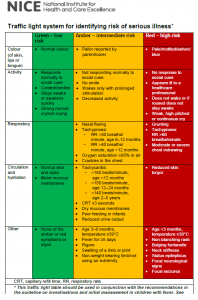
NICE published a Traffic Light system for detecting serious illness in febrile under 5s. A bit unwieldy, seems to cover the main issues, retrospectively sensitivity is only about 85%, and specificity only 29% for serious bacterial infection.Traffic lights NICE fever

Red symptoms/signs are ones that clearly indicate serious illness eg

  • weak, high pitched or continuous cry (meningitis)
  • grunting
  • tachypnoea >60
  • reduced skin turgor

The Amber group includes the vast majority of children coming to hospital with fever. In particular:

  • creps
  • tachypnoea >50 (under 1) or >40 over 1
  • tachycardia >160 (under 1), >150 (1-2), >140 (over 2)
  • rigors (not probably much more predictive than high fever – ?higher risk of urinary sepsis?)

And anyway, we know signs and symptoms other than classic neck stiffness etc fail to predict outcome; best predictor is still “something is wrong” or “appears unwell”.  In Jonathan Craig’s big Australian study looking at more than 25 clinical indicators for bacteraemia, UTI and pneumonia, “appearing generally unwell” was the strongest diagnostic marker for all 3 groups.  Raised temperature, no fluid intake in the previous 24 hours, increased capillary refill time, and chronic disease also predictive. [BMJ 2010;340:c1594]

Hence most important primary care action is prompt clinical assessment by experienced clinician. [BrJGP 2007;57:538, pmid 17727746]

Compared with other scoring systems, NICE traffic lights work pretty well but note how none of these systems work as well as they were supposed to, and performance varies across different datasets.

Adding urinalysis improved sensitivity to 92%, since most of the missed infections were UTI. (De et al, BMJ 346: f866 ).  Thus, prize winning haiku:

Improve the NICE guide
for under 5s with fever
Urinalysis

[Brian Attock]

See also antipyretic treatment.


Scoring systems

As usual, any system that has reasonable sensitivity has rubbish specificity (negative predictive value).  Retrospective analysis of 9000 UK A&E attendees <15yrs –

  • a modified Yale Observation Scale (YOS) – sensitivity of 54.0% and specificity of 63.7% at a cut-off of 10.
  • Pediatric Advanced Warning Score (PAWS) – sensitivity of 58.0% and specificity of 81.3% if any ‘red’ sign was present.
  • Alert, Voice, Pain, Unresponsive (AVPU) scale;
  • Recognising Acute Illness in Children (RAIC) score; sensitivity of 76.0% and specificity of 6.2% for ruling out serious bacterial infection at a score of 5 or less.
  • Oxford Vital Signs score sensitivity of 80.0% and specificity of 49.3% if any sign was present.
  • 2007 version of NICE CG160 (Fever guideline) traffic light system. 100% sensitivity and specificity on 0.12% if any ‘amber’ or ‘red’ sign was present, and had sensitivity of 62% and specificity of 74.5% if any ‘red’ sign was present  But data available covered only a selection of red and amber features.

[Verbakel, Pediatric Emergency Care 2014; 30: 373–80]

Same author applied rules to different data sets across UK, Netherlands and Belgium, found that all had lower performance than in their original derivation studies, but also wide variation across datasets eg NICE CG160 specificity ranged from 1-28.7%! Hard to understand differences.  [BMC Medicine 2013; 11: 10]

Lacour scoring system (“Laboratory-Score”) based on CRP, PCT and urinalysis. Has sensitivity of 94%, spec of 81%. Would reduce incidence of antibiotic use from 65 to 40% but good enough? [Lacour, PIDJ 2008 PMID 18536624]


Malaria

Protozoal infection, spread by Anopheles mosquitoes.

A crippling problem in sub-Saharan Africa but also seen in South and South East Asia, Caribbean (Dominican Republic has low risk). The only malaria free zones in the tropics are cities (some) and communities at altitude. Used to be endemic in Europe (even Southern England) and southern states of US.  800 000 deaths per year, mostly young African children.  Hypoendemic areas eg SE Asia do not acquire immunity and whole population is at risk of severe disease.

Resistance continues to be a major problem and a vaccine remains elusive. The prevalence of fake medicines in endemic countries is another major problem.

Malaria has been with human beings for a long time in evolutionary terms, as seen in the numerous genetic mutations that occur for the express benefit of conferring partial immunity eg sickle cell trait, G6PD, hereditary spherocytosis, HLA B53 (confers 40% protection vs severe malaria). At the same time, the parasite has evolved multiple ways of avoiding the immune system, which is why developing a vaccine has proved so difficult.

  • Plasmodium falciparum – causes the most severe disease, predominates in Africa, widespread resistance, but no liver stage
  • Plasmodium vivax/ovale – cause less severe disease, predominates in Asia, resistance rare, liver stage
  • Plasmodium malariae – causes less severe disease, predominates in Asia, resistance rare, but no liver stage
  • Plasmodium knowlesi – rarely severe

The parasite sporozoite form is injected with salivary secretions into the human host. It circulates until it reaches hepatocytes, where it replicates and forms clusters called schizonts. These release trophozoites into the blood stream, where red cells are infected and further replication occurs. Disease only appears once widespread haemolysis has occurred, usually 3 weeks or more after initial infection. A proportion of trophozoites transform into gametocytes. When these are ingested along with human blood by another mosquito, they can then continue the life cycle in the mosquito. In P vivax and ovale, longlasting hypnozoites may persist in the liver, which can be responsible for late reactivation of disease. So suspect for up to a year after exposure (although Falciparum will present within 3 months).

Clinical

Young children, hyposplenic, pregnant at particular risk (even if prev immunity).

Incubation period 10-21 days, but up to 3 months for falciparum, and note liver stage and late reactivation above.

No typical clinical features! Even fever is not a reliable sign!  Can present with GI symptoms, sore throat, lower respiratory complaints!

Clinical effects due to RBC destruction, cytokines release, micro circulation disturbance.

In endemic areas, intermittent asymptomatic low level parasitaemia is seen commonly, with recurrent, usually self-limiting, episodes of mild disease (plus chronic anaemia). Severe disease on the other hand can present as:

  • cerebral malaria
  • severe haemolysis
  • ARDS
  • acidosis

In non-endemic disease, particularly travellers or people who have lost their immunity by long term lack of exposure after emigration, the infection is more likely to be symptomatic, and the disease is more likely to be severe.

Mild disease

Fever, chills, sweats, myalgia, headache.  Anaemia, splenomegaly. Gastro and resp symptoms (even sore throat) common! Fever periodicity traditionally described as daily (falciparum), Tertian (vivax/ovale), Quartan (malariae) ie spikes every 3 or 4 days.  In practice this is wholly unreliable!

Moderate Risk

Parasitaemia >5% (not very well correlated, and not relevant for non-falciparum)

Sickle cell disease (who have worse outcomes, despite being relatively protected!)

High Risk

  • Pregnancy (high levels in placenta, even if not so obvious in blood).  Use clinda instead of doxy.
  • Asplenic or splenic dysfunction
  • Acidosis (BE >-8)
  • Hyperkalaemia (>5.5mmol/L)
  • Hypoglycaemia
  • Impaired conscious level

Respiratory distress usually due to acidosis rather than cardiac failure. Hence Kussmaul breathing predicts death.

Diagnosis

Do not wait for the results of tests if symptoms/signs suggestive, since falciparum can be rapidly aggressive.  Stop chemoprophylaxis, as can obscure!

Malarial retinopathy (Malawi eye) found in severe malaria: patchy white spots similar to hard exudates, frosted branch appearance of vessels, and ring shaped haemorrhages (not pathognomic though, seen in infarction).

The blood smear is the classic test. Thin smears are best for identifying the particular type of malaria and the percentage parasitaemia (percentage of erythrocytes infected), but thick smears are more sensitive. Repeat testing is important – at 12-24hrs and again at another 24hrs. Best at time of fever spike? Sensitivity is only 70% on a single smear, but rises to over 95% with 3 smears.

Having >20% of periph forms with pigment (mature) reflects high burden of deep circulating parasites cf young ring forms, so a risk factor for poor outcome. >5% neutrophils containing ingested pigment is another risk indicator.

New molecular based antigen tests are expensive but are less reliant on operator experience.

  • HRP2 (histidine rich protein) is specific to falciparum.
  • pLDH versions are available for falciparum and vivax.
  • Aldolase is a pan-specific antigen, but probably not as sensitive as the others.

These are pretty much as good as smears for falciparum and vivax, not quite as good for other species.

Thrombocytopenia common, not significant in isolation.  Check FBC, U&Es, LFTs, Glucose.  If ill, lactate, blood gas, blood cultures (accompanying bacterial sepsis common esp salmonella in endemic areas). Consider LP if impaired consciousness, seizures.

Notifiable! Other family members likely to be infected too?

Differential

Typhoid, hepatitis, dengue, VHF, HIV, avian influenza

Treatment

UK Guidelines 2016. Journal of Infection. 72(6), 635-649 (Lalloo, Shingadia).

Treatment of choice for non-falciparum is 3/7 oral Chloroquine or Co-artemether.  Co-artemether if mixed infection or concern about chloroquine resistant vivax (some areas). Must be followed by Primaquine, the only effective treatment for liver stage – beware G6PD deficiency (test at same time as doing films! Use only under expert supervision!)

For falciparum, treatment of choice for uncomplicated is Riamet (co-artemether) – alternative is Eurartesim.  If not available, use oral quinine or atovaquone-proguanil (Malarone).

Admit falciparum initially – risk of deterioration on  treatment, and check tolerating oral therapy.

Quinine is effective but poorly tolerated in prolonged treatment, and should always be supplemented by additional treatment, typically doxycycline in adults, clindamycin or Fansidar (Pyremethamine-sulfadoxine) in children.  All with falciparum should be admitted for at least 24hrs, given risk of sudden deterioration even with treatment.

IV artesunate should be used for severe disease, or infections with >2% parasitaemia, until well enough to tolerate oral treatment.  IV artesunate works quicker and is more effective in selected situations than IV quinine but is unlicensed, obtain through specialist centre on named patient basis. If not immediately available start IV quinine (and monitor for hypoglycaemia).

Adjunctive

  • Broad spectrum antibiotics in severe cases until bacterial infection excluded.
  • Surprisingly, shock usually responds to just 1 bolus of fluid. Excessive fluid resuscitation is likely to precipitate cardiac failure in severe anaemia, may exacerbate anaemia and raised intracranial pressure. Albumin appears to be superior to crystalloid (esp in coma – less mortality, ?membrane stabilizing).
  • Oxygen for respiratory distress
  • Glucose if hypoglycaemia
  • Poor evidence for exchange transfusion – consider for persistent acidosis or multiorgan failure, sickle cell
  • Seizures: follow standard guidelines. Partial, subtle seizures are common. No evidence to support prophylactic phenobarbitone.  Posturing common, assoc with spike in ICP so ventilation with paralysis may be advantageous. Exclude hypoglycaemia.

Follow up

Haemolysis occurs in 10-15% of patients treated with IV artesunate – check FBC at 14 days.

Vaccine?

A vaccine would be fantastic, but a potential candidate is yet to be found. There are several barriers:

  • Antigens of the different life cycle stages differ
  • Need to generate v high immune response
  • Need to overcome escape mechanisms

First phase III results in 2011 in Africa showed that RTS,S vaccine reduced clinical reports of malaria by 51 per cent.  After 3 years, reduces cases by 36%.  60 000 to be recruited across 7 countries.  Works against circumsporozoite protein (CSP) so blocks liver infection, has HBsAg adjuvant.